3DO Interactive Multiplayer

Overview
Introduced in 1993 by Panasonic - Sanyo - Goldstar, the 3DO Interactive Multiplayer was a fifth-generation console system. Built around a 12.5 MHz ARM60 CPU with 2 MB of RAM and 1 MB of VRAM, it was technically advanced for its time but launched at a premium price which limited its mainstream success. Panasonic, Sanyo and Goldstar (later LG) licensed the hardware design from The 3DO Company rather than producing consoles themselves.
In REG-Linux, the 3DO is handled as part of the 3do system group. The frontend can scrape metadata for this group and, when the theme supports it, display a dedicated visual set for the platform.
Technical specifications
- Manufacturer: Panasonic - Sanyo - Goldstar
- Release year: 1993
- Hardware type: console
- CPU: 12.5 MHz ARM60
- System RAM: 2 MB
- Video RAM: 1 MB
Supported ROM extensions
iso, chd, cue
Quick reference
- Emulator: RetroArch
- Core: Opera (libretro)
- ROM folder:
/userdata/roms/3do - Recommended formats:
.iso,.chd,.cue - Shared saves: Enable NVRAM STORAGE for multi-disc titles
REG-Linux integration
ROM images go into /userdata/roms/3do/. To save space while keeping compatibility, REG-Linux encourages converting disc images to CHD, though .iso, .chd and .cue files are all supported in the same folder. The system group allows metadata scraping and visual themes to treat 3DO uniquely within the frontend.
Multi-disc games
The Opera core supports multi-disc titles without M3U playlists, but older workflows required renaming saves when swapping discs. From REG-Linux v34 onward you can highlight the multi-disc entry, press [SELECT], open the advanced system settings and enable NVRAM STORAGE. When enabled, every disc in that release shares the same NVRAM file, letting you swap discs without losing progress while mirroring the original hardware's limited internal storage.
Required BIOS files
RetroArch's Opera core needs original 3DO BIOS files to boot games. Place them in the bios folder using the exact filenames and MD5 hashes below:
| MD5 checksum | Share file path | Description |
|---|---|---|
f47264dd47fe30f73ab3c010015c155b |
bios/panafz1.bin |
Panasonic FZ-1 |
51f2f43ae2f3508a14d9f56597e2d3ce |
bios/panafz10.bin |
Panasonic FZ-10 |
8639fd5e549bd6238cfee79e3e749114 |
bios/goldstar.bin |
Goldstar GDO-101M |
If any checksum mismatches or a file is missing, the core may refuse to boot or behave unpredictably.
Emulators
RetroArch
RetroArch is the primary frontend used for 3DO emulation in REG-Linux. General interface, hotkeys and configuration help are documented on the RetroArch page.
Opera (libretro)
Opera is a low-level emulator derived from 4DO (which itself was a fork of FreeDO) that has been adapted to the libretro API. REG-Linux ships the current libretro Opera core. This core exposes standardized REG-Linux hooks such as 3do.rewind, 3do.autosave, 3do.netplay and 3do.cheevos.
Core-specific documentation and compatibility lists can be found via:
Opera core features & options
| ES setting name + REG-Linux.conf key | Description => ES option value |
|---|---|
VIDEO RESOLUTION global.high_resolution |
Increase the internal framebuffer from 320x240 to 640x480 for better 3D visuals without touching 2D sprites. => 320x240 disabled, 640x480 enabled. |
CPU OVERCLOCK global.cpu_overclock |
Emulates the original 12.5 MHz ARM60 CPU but allows up to 2x overclocking; 1.5x is typically a good balance for demanding titles such as Need for Speed. => 1.0x (12.50Mhz) 1.0x (12.50Mhz), 1.1x (13.75Mhz) 1.1x (13.75Mhz), 1.2x (15.00Mhz) 1.2x (15.00Mhz), 1.5x (18.75Mhz) 1.5x (18.75Mhz), 1.6x (20.00Mhz) 1.6x (20.00Mhz), 1.8x (22.50Mhz) 1.8x (22.50Mhz), 2.0x (25.00Mhz) 2.0x (25.00Mhz). |
ACTIVE INPUT DEVICES FIX global.active_devices |
Limits the number of controllers reported by the core to avoid games becoming unresponsive. Match this to the number of players or set to 1 for solo play. => 1-8. |
ADDITIONAL GAME FIXES global.game_fixes_opera |
Collection of timing fixes per title; Auto usually works, but heavy hitters such as Alone in the Dark or Crash'n Burn may benefit from the specific hacks. => Off disabled, Alone in the Dark timing_hack6, Crash'n Burn timing_hack1, Dinopark Tycoon timing_hack3, Microcosm timing_hack5. |
NVRAM STORAGE global.opera_nvram_storage |
Choose Shared to share saves between discs in a multi-disc release or Per Game for separate storage. => Shared shared, Per Game per game. |
Controls
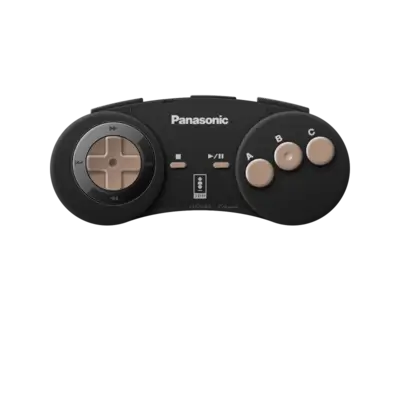
The default 3DO controller maps to the REG-Linux Retropad. Overlays and per-game mappings can be adjusted through the platform's standard controller configuration tools.
Troubleshooting
- Check that BIOS filenames and MD5 hashes match the required values.
- Confirm ROM images use supported formats (
.iso,.chd,.cue). - Verify games live under
/userdata/roms/3do/. - Consult the RetroArch page for general issues such as audio glitches, stuttering or netplay questions.